El Niño is increasingly likely to become a material macroeconomic event in late 2026. That does not make it a single global inflation trade. The weather forecast is only the first step in a chain that runs through rainfall, crop yields or power output, local inventories, trade, currencies, consumer-price baskets and central-bank responses.
The World Meteorological Organization said in June that there was an 80% likelihood of El Niño during June-August and a probability near or above 90% that it would continue at least until November. It also stressed uncertainty around peak timing and strength in its official update. Later forecasts have strengthened, but different products use different windows and classifications.
For investors, the useful question is not whether forecasters use the informal phrase “super El Niño.” It is where a physical shock will meet an economic amplifier. Persistent inflation is more plausible when crop or hydropower disruption coincides with weak currencies, high food weights, limited fiscal buffers and a central bank already defending credibility.
Ocean temperature is only the first link
Confidence in the climate phase is higher than confidence in any national economic outcome. A July early-warning synthesis by Welthungerhilfe, drawing on WMO, NOAA, GEOGLAM and regional agencies, said El Niño conditions had developed and were expected to strengthen rapidly. It also warned that seasonal forecasts express probabilities, not deterministic impacts.
That qualification is central. El Niño changes the odds of drought, heat or heavy rain, but the effects differ by region and season. The same synthesis described near-term drought and heat concerns in parts of East Africa and South Asia, alongside the possibility that parts of equatorial East Africa could move toward wetter conditions later in the year. Other climate drivers, including the Indian Ocean Dipole, can reinforce or offset the signal.
A stronger ocean anomaly can make some regional patterns more predictable without making every loss more severe. Local planting calendars, irrigation, reservoirs, seed choice and pre-existing soil moisture intervene between the climate index and production. The forecast is therefore a map of exposure, not an earnings or inflation estimate.
Food inflation needs a domestic amplifier
The first market channel is agricultural supply. Lower yields can raise local staple prices, reduce export availability and change trade policy. But pass-through depends on the crop, the country's stockpiles and its position as importer or exporter. A shortage that is manageable for a country with reserves can become an external-financing problem for an importer with a weak currency.
Reuters' country survey identified India and several Asian economies as exposed through monsoon-dependent agriculture, food prices and currencies. It also noted a counterexample: additional rainfall can support Argentine grain output and foreign-exchange inflows. That contrast is why a broad “buy commodities, sell emerging markets” rule is too crude.
Consumer baskets create the next amplifier. Food typically has greater weight in lower-income economies, so the same percentage increase in staples can move headline inflation more. Currency depreciation can add imported food, fertilizer and energy costs. Governments may respond with subsidies, reserve releases or export restrictions, shifting part of the burden from consumer prices to fiscal accounts or trading partners rather than eliminating it.
Hydropower turns rainfall into a second price channel
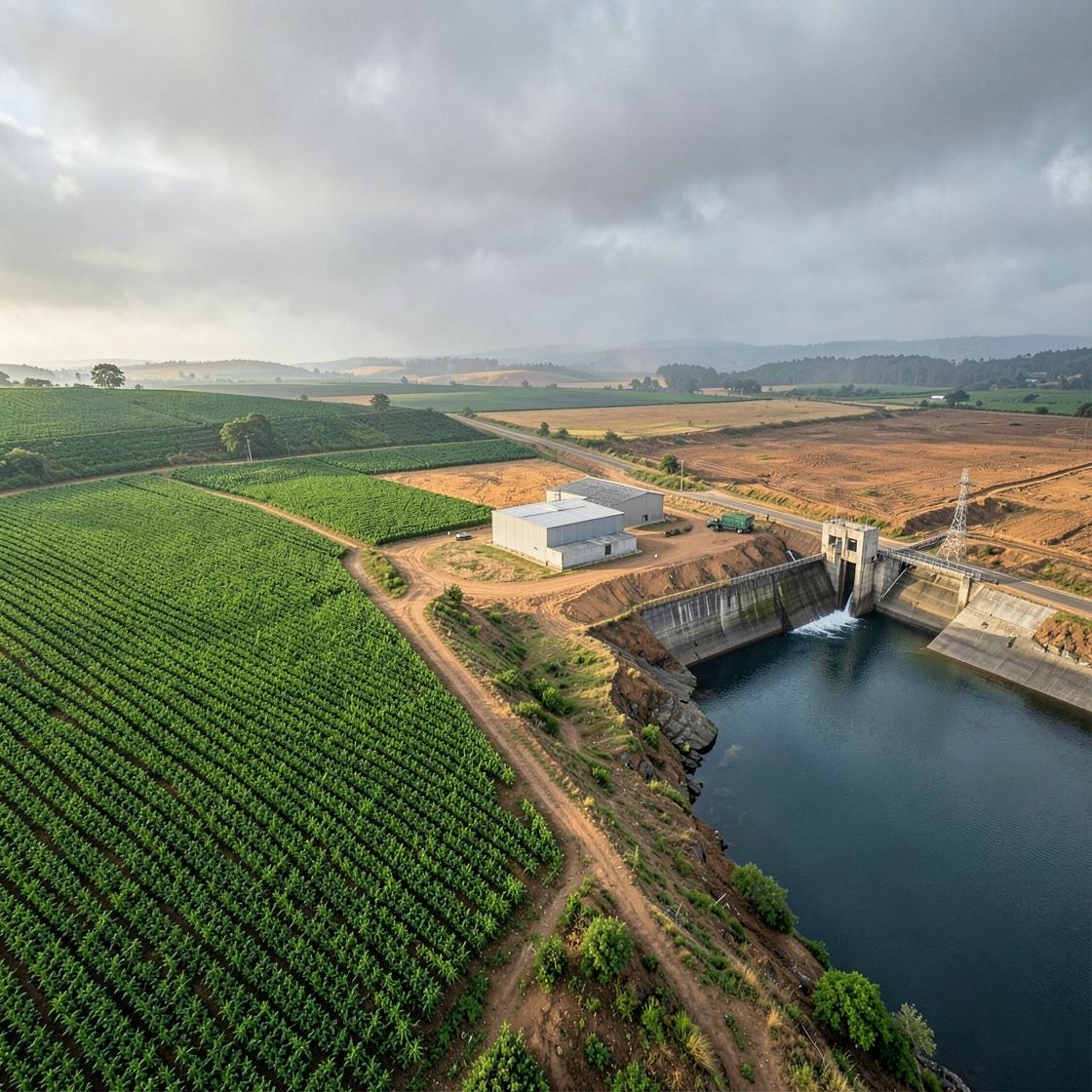
Agriculture is not the only transmission route. In hydropower-dependent systems, weak rainfall can lower reservoir levels and force utilities to use more expensive thermal generation. Reuters highlighted Colombia as an example where rainfall can therefore affect both food and electricity prices. Flooding can create a different power problem by damaging grids, roads and logistics.
This second channel matters because the starting point is already uncomfortable. The IMF's July World Economic Outlook update said energy prices were roughly 25% above prewar levels and global headline inflation had risen for a third consecutive month in May, while core inflation remained relatively stable in most countries. El Niño would thus arrive as an additional supply risk, not in isolation.
Central banks must distinguish a temporary level shock from evidence of broader persistence. Tightening cannot make it rain or restore a crop, but policymakers may react if food and electricity costs spread into wages, expectations, services or the exchange rate. Conversely, hiking into a localized supply loss can deepen a growth slowdown without repairing supply. The reaction depends on credibility and second-round effects, not the weather headline alone.
The investable signal arrives after the forecast
The highest-value evidence will come from the middle of the transmission chain. Crop-condition reports, planting progress, soil moisture, reservoir levels and wholesale staple prices will show whether the physical risk is becoming output loss. Import tenders, export controls and inventory releases will reveal whether governments are absorbing or exporting the shock.
Markets then need to test pass-through. Local food and power inflation, currency performance, inflation expectations and central-bank language matter more than a global ENSO index once the event is established. A strong El Niño with stable harvest estimates, adequate reservoirs and anchored expectations would weaken the thesis that monetary policy must stay tighter. Simultaneous crop downgrades, falling reservoirs and currency pressure would strengthen it.
The counterargument is substantial: trade can reroute supply, inventories can bridge a poor season, favorable rainfall can help some exporters and long-range regional forecasts can change. That is why the event should be treated as a sequence of conditional risks. El Niño raises the probability of a shock; domestic amplifiers decide whether it reaches inflation, rates, sovereign financing and company margins.