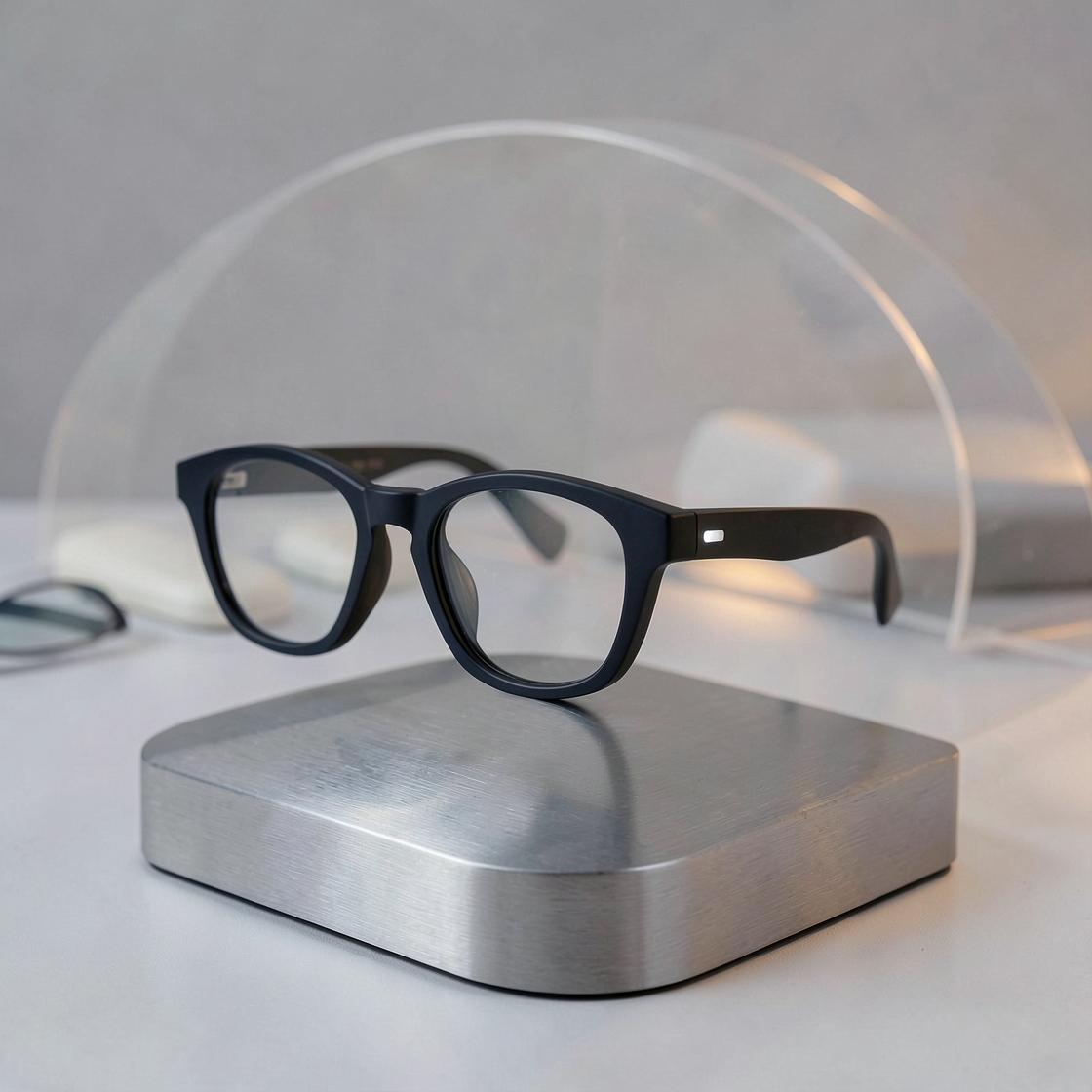
Smart glasses have crossed an important commercial threshold without resolving the social one. EssilorLuxottica said revenue from AI glasses almost doubled year over year in the second quarter. At the same time, a Gizmodo report focused on the unease created when a camera looks like ordinary eyewear.
Both developments can be true. Rapid sales show that buyers value hands-free capture, audio and AI assistance. They do not show that people around the wearer recognize recording, consent to it or feel comfortable enough for the device to become ordinary in workplaces, schools and social settings. That distinction matters because the buyer produces part of the product's privacy cost but does not bear all of it.
Eyewear retail removed the first adoption barrier
EssilorLuxottica has an advantage that is easy to miss if smart glasses are treated only as small consumer electronics. Glasses must fit a face, work with a prescription, look acceptable and remain comfortable. Those requirements favor optical shops, opticians, recognizable frame brands and after-sales service. In its first-quarter presentation, the company said its network was approaching 20,000 locations worldwide after expanding in Thailand.
That physical route to market converts several technology problems into familiar eyewear transactions. A customer can try frames, select lenses and receive fitting support in one place. Prescription integration can also turn a novelty into a device worn for vision correction anyway. The company reported in its half-year release that comparable-store sales rose 8.0% in the second quarter, with optical and sunglasses banners contributing equally.
The distribution thesis does not depend entirely on wearables. EssilorLuxottica said its core eyewear and eyecare business grew at a mid-single-digit rate in both the quarter and half. That existing base can fund product education and provides store traffic. It also makes attribution harder: strong retail performance is not a pure measurement of smart-glasses demand.
Near-doubling is a growth rate, not a segment account
The reported momentum is material. Group revenue rose 9.7% at constant exchange rates in the first half, with second-quarter growth of 8.7%. Adjusted operating profit increased 15% at constant currencies, the adjusted operating margin reached 18.6% at current rates, and free cash flow was €1.07 billion. Reuters reported adjusted operating profit of €2.75 billion, above the €2.46 billion Visible Alpha consensus.
Those figures demonstrate group-level operating strength. They do not disclose AI-glasses revenue in euros, units sold, gross margin, returns, warranty costs or active use. Nearly doubling a small base can be strategically important while remaining modest beside €14.82 billion of first-half group revenue. It can also consume investment before scale improves profitability. The current evidence supports category traction, not a standalone segment valuation.
There is a credible positive interpretation. Prescription-lens penetration and manufacturing learning could raise revenue per pair and lower unit cost, while the retail network reduces customer-acquisition friction. The counterargument is that hardware replacement cycles may be long, functions can remain dependent on a technology partner, and early buyers may not represent mainstream repeat usage. Neither side can be settled from a growth percentage alone.
The person being recorded is outside the sale
Meta says its current glasses use a white capture LED that blinks while photos or video are recorded. Its July explanation says blocking the light disables the camera and that newer safeguards detect physical tampering. These are concrete hardware controls. They reduce a clear abuse path, but notice is effective only if a bystander sees the light and understands it.
That was the issue identified by the Irish and Italian privacy regulators when the first generation launched. The Irish Data Protection Commission's 2021 statement did not claim all recording was unlawful. It questioned whether a small indicator gave effective notice and asked for evidence from field testing and public education. The statement predates today's models, so it cannot prove the newer safeguards fail. It does establish that visibility, not merely the existence of an LED, is the relevant test.
For organizations subject to European data-protection rules, the European Data Protection Board's video-device guidance emphasizes lawful purpose, necessity, transparency and data minimization. Personal use and organizational deployment can fall under different legal rules. Commercially, however, the wider friction is similar: a workplace, venue or customer may restrict a device when it cannot tell reliably whether capture is active or what happens to the data.
Trust will show up in usage before it shows up in revenue
The strongest counterargument is already visible: sales are rising, group margins are improving, smartphones also record in public, and the glasses include safeguards that phones generally do not. Privacy concern has plainly not stopped demand. But a phone is usually raised or aimed when recording; eyewear remains on the face. The product's convenience for the wearer is inseparable from its ambiguity for everyone else.
Evidence that would strengthen the platform case includes disclosed wearable revenue and unit growth, higher prescription attachment, low return rates, repeat purchase, sustained active use and stable margins after product launches. Evidence that would weaken it includes devices being left at home, persistent complaints about notice, restrictions by institutions, high returns or growth that requires declining hardware economics. Near-doubling revenue proves that distribution has found buyers. Whether smart glasses become an everyday platform depends on whether the people outside the transaction learn to trust their presence.