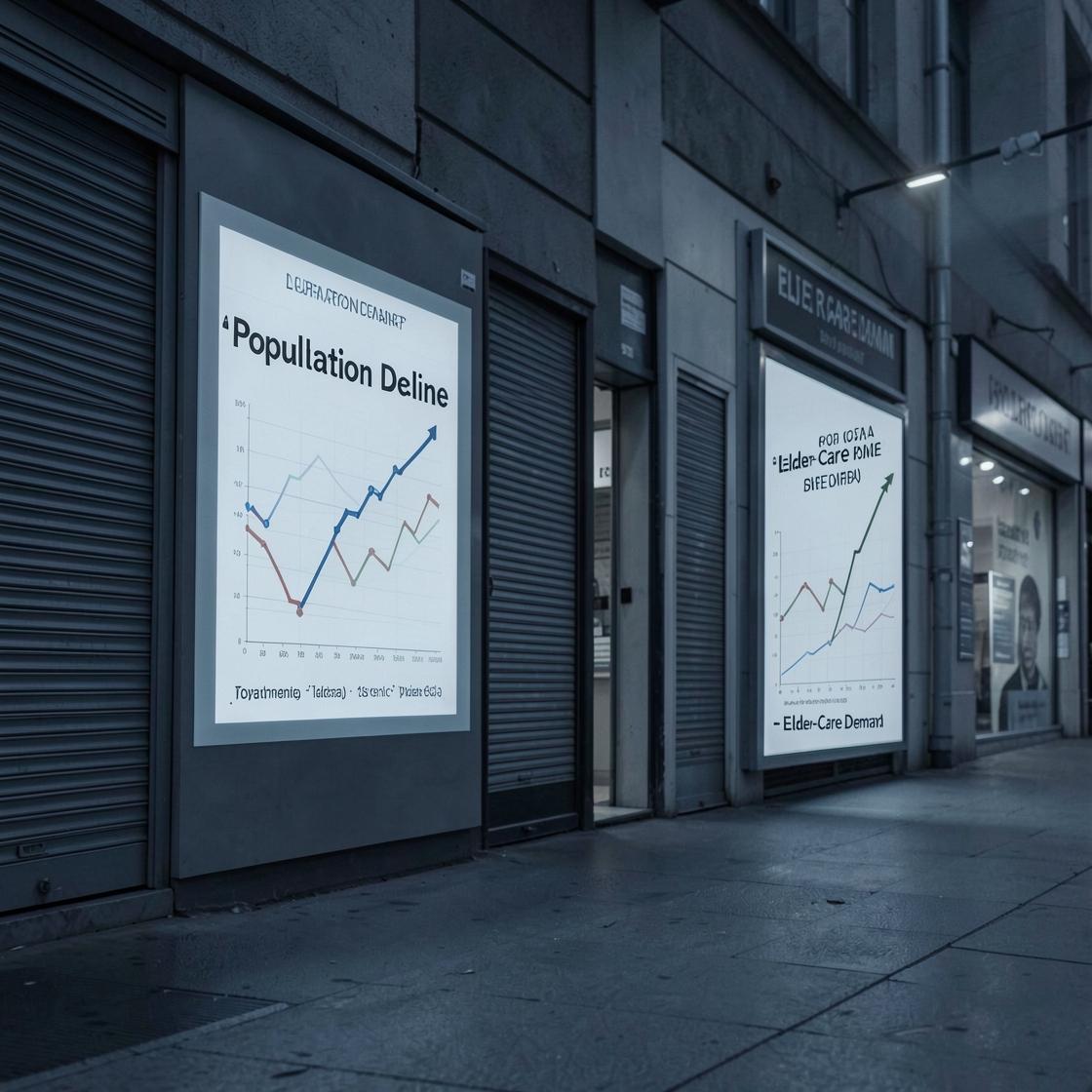
Demographic Shifts Unveiled
"It doesn't take long to spot an empty shop front, or several of the area's growing number of elderly people. ... Decades after the fall of the Berlin Wall, a population slump in the east lays bare the existing divisions." (BBC News, 29 June 2026)
The report highlights visible signs of a demographic decline in Eastern Germany, where empty storefronts and an increasing share of seniors are becoming commonplace. Jan‑Niklas, who views German reunification as a “success story,” is on a mission to address these trends.
Economic and Market Implications
Retail and Commercial Real Estate: A shrinking consumer base can reduce foot traffic, pressuring small‑scale retailers and potentially lowering commercial property values.
Labor Market: An aging population may tighten the supply of working‑age residents, raising labor costs for businesses operating in the region.
Sectoral Opportunities: Demand for health‑care, elder‑care services and age‑friendly infrastructure is likely to rise, creating a niche for investors focused on these segments.
Analyst Note: The demographic trend foregrounds a long‑standing East‑West divide that could influence regional fiscal policies and allocation of federal funds.
Outlook
While the population decline presents challenges for traditional retail and real‑estate investors, the evolving age profile signals growing demand for services catering to seniors. Stakeholders should monitor regional policy responses and demographic data to gauge the pace of change.
Source: BBC News, “How population decline is exposing Germany's old divides,” published 29 June 2026.