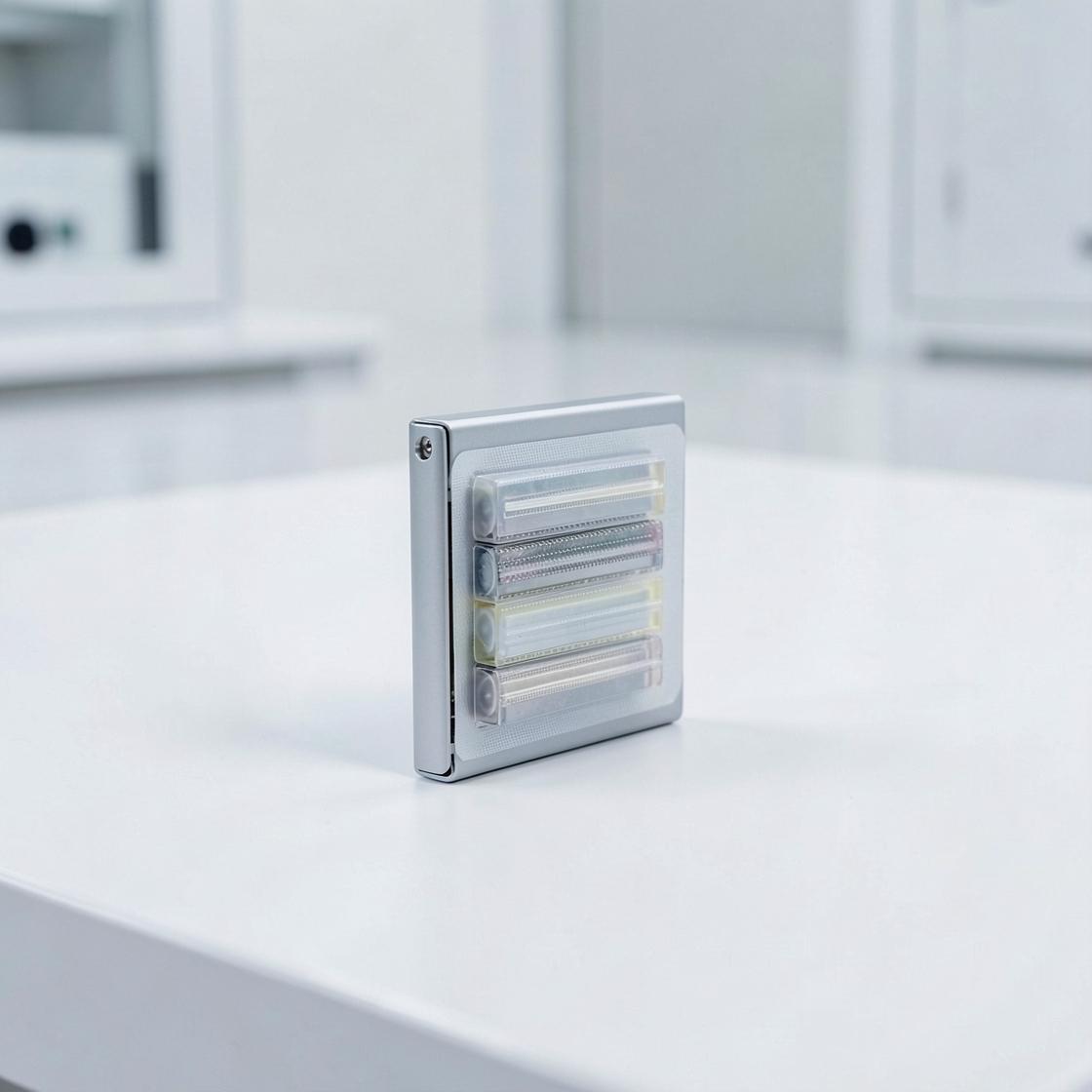
Belkin has put semi-solid battery cells into two power banks priced like premium accessories rather than laboratory demonstrations. That is a meaningful commercialization step. It is also a narrow one. The products show that a familiar consumer brand can package, price and distribute the chemistry at small scale; they do not settle the larger questions usually attached to solid-state batteries.
The original report describes the launch as Belkin's first use of the technology. Belkin itself is more precise: BoostSolid Cell is semi-solid-state, combining a gel-like layer with liquid electrolyte. The distinction matters because the practical claim is about a better power bank, not the arrival of an all-solid battery platform.
Two shelf prices establish the first hurdle
Belkin announced two UltraCharge Pro models for September 2026. The magnetic 5,000mAh version costs $69.99, measures 8.8 millimetres thick and supports Qi2-certified 15W wireless charging plus a 22.5W USB-C port. The 10,000mAh version costs $89.99, supplies up to 60W through USB-C and adds a display and three-device charging. Those specifications come from the company's launch release.
Neither price creates a new purchasing category. Consumers already compare premium power banks on capacity, size, output, charging standards and warranty. Semi-solid chemistry can therefore enter as a product attribute rather than asking buyers to fund unfamiliar infrastructure. That lowers the commercial hurdle and makes the accessory shelf a useful first market. It also limits what can be inferred: a buyer accepting a modest premium for a slim pack says little about the cost tolerance of a vehicle or stationary-storage system.
A gel layer is a bridge, not the destination
Belkin says BoostSolid adds a gel-like layer alongside the liquid electrolyte used in conventional lithium-ion cells. As The Next Web explains, that makes it semi-solid, not all-solid-state. The architecture seeks some benefits of immobilising electrolyte without eliminating liquid entirely.
This intermediate design has a rational engineering purpose. Liquid electrolytes offer good ion transport and manufacturability, while solid electrolytes promise lower flammability and potentially higher energy density. A technical review of the transition notes that solid systems still face disadvantages in ionic conductivity, processing cost and electrode-interface compatibility. A hybrid approach can trade theoretical purity for something that is easier to manufacture now.
The label should therefore be read as a continuum, not a binary breakthrough. Belkin has not disclosed enough chemistry, supplier or manufacturing detail to compare its cell directly with other semi-solid designs. The launch establishes a packaged application, not a universal performance result.
Small packs avoid the hardest scaling problem
A power bank is a favourable proving ground. Its capacity is small, its enclosure can include dedicated sensors and charging controls, and a failed unit can be replaced without immobilising a vehicle or energy system. Belkin says dual analogue and digital sensors check temperature every 250 milliseconds and interrupt power outside operating limits. Its 10K product page describes the same cadence as four checks per second.
Large packs multiply cells, interconnections, heat paths and manufacturing tolerances. They also impose longer qualification cycles and harsher economic penalties for degradation or recall. Success in an accessory does not answer cell-to-cell consistency, pack-level thermal propagation or production yield at that scale. It can still produce useful operating data, but the evidence must remain attached to the product class that generated it.
The counterargument is that modest applications are how unfamiliar components become ordinary. A power bank reaches thousands of charge cycles quickly enough to expose swelling, capacity loss and control failures. Belkin's distribution and warranty process can create a larger field sample than a pilot fleet hidden behind engineering agreements. Small scale is a limitation and an advantage at the same time.
The strongest numbers still come from Belkin
The headline claim is up to three times longer life than traditional liquid cells. Belkin's footnote defines that as retention of up to 80% capacity after 1,000 charge cycles. Its estimated five-year life assumes one complete charge and discharge every two days. This is a test condition and usage assumption, not a five-year field observation.
The 10K model is also described as 27% smaller than a standard 45W power bank of similar capacity. Its 24-minute charge of an iPhone 17 Pro to 50% is explicitly based on internal testing. The product listing does not publish a third-party cycle report, test sample distribution or degradation curve. Consumers are being offered precise claims, but the underlying datasets remain controlled by the vendor.
Safety language needs the same discipline. Belkin says the products are designed to meet UL 2056:2025 requirements. UL Solutions says the standard covers overcharge and discharge protection, short circuits, overloads, impacts and thermal safety. Meeting it would be useful product-level evidence; it would not mean a battery is risk-free or validate a different pack category.
Travel compliance is similarly bounded. The FAA requires power banks to remain in carry-on baggage, allows lithium-ion batteries up to 100Wh without airline approval and warns that carriers may impose stricter rules. Chemistry does not remove those handling requirements.
Returns will become the useful battery dataset
The evidence that matters next will arrive after sales begin: capacity retention across real charging temperatures, swelling and failure rates, warranty claims per thousand units, the share of packs still above 80% capacity after several hundred cycles and whether the size advantage survives across later models. Independent teardown and certification records would clarify the chemistry and safety claims.
For now, Belkin has cleared a practical but limited hurdle. Semi-solid cells have entered a mainstream accessory at $69.99 and $89.99, with specifications consumers already understand. That is stronger evidence of commercialization than a prototype announcement. It remains weaker evidence of battery performance than a transparent field dataset. The accessory shelf is the beginning of the test, not its verdict.