Arizona's new Colorado River constraint is easy to describe as a shortage and harder to price as a utility problem. The federal operating rules reduce physical deliveries, but Phoenix has storage, alternative rivers, wells, treatment assets and pipes designed to keep customer service stable. Those buffers do not make scarcity free. They move its first financial impact from the tap to the balance sheet.
The Bureau of Reclamation's 2027-2028 guidelines call for 1.25 million acre-feet of annual delivery reductions across the Lower Basin in each of the next two years. Under the states' proposed sharing arrangement, Arizona would take 760,000 acre-feet, California 440,000 and Nevada 50,000. That is an allocation decision at the wholesale system. It is not a forecast that the same percentage will disappear from every household meter.
The allocation falls before household service does
Phoenix explicitly says the federal decision does not immediately interrupt water service or require mandatory restrictions. Its current drinking-water mix explains why: about 40% comes through the Central Arizona Project from the Colorado River, 58% from the Salt and Verde rivers and roughly 2% from groundwater. A cut to one source therefore lands on a portfolio rather than a single pipe.
That distinction protects reliability but does not erase exposure. The precise effect on Phoenix depends on how Arizona and Central Arizona Project participants implement the state share. Agriculture, tribes, municipalities and industries do not all have identical priorities or alternatives. The city can increase stored-water use and other backup supplies while the allocation details settle. In financial terms, it is exercising an option that was purchased through earlier conservation and infrastructure spending.
The original NPR report captures the apparent paradox: service can remain reliable while bills face upward pressure. The mechanism is not that less water automatically commands a posted market price. It is that replacing, moving and treating the next unit can cost more than continuing the old delivery pattern.
Stored water is an asset with a replacement cost
Underground reserves are often discussed as if they were simply inventory. They are closer to working capital for a utility. Water had to be acquired, conserved, transported and stored before a drought, while recovery wells and pipes must be available when the reserve is used. Drawing it down sustains operations today but consumes flexibility for a later, possibly worse year.
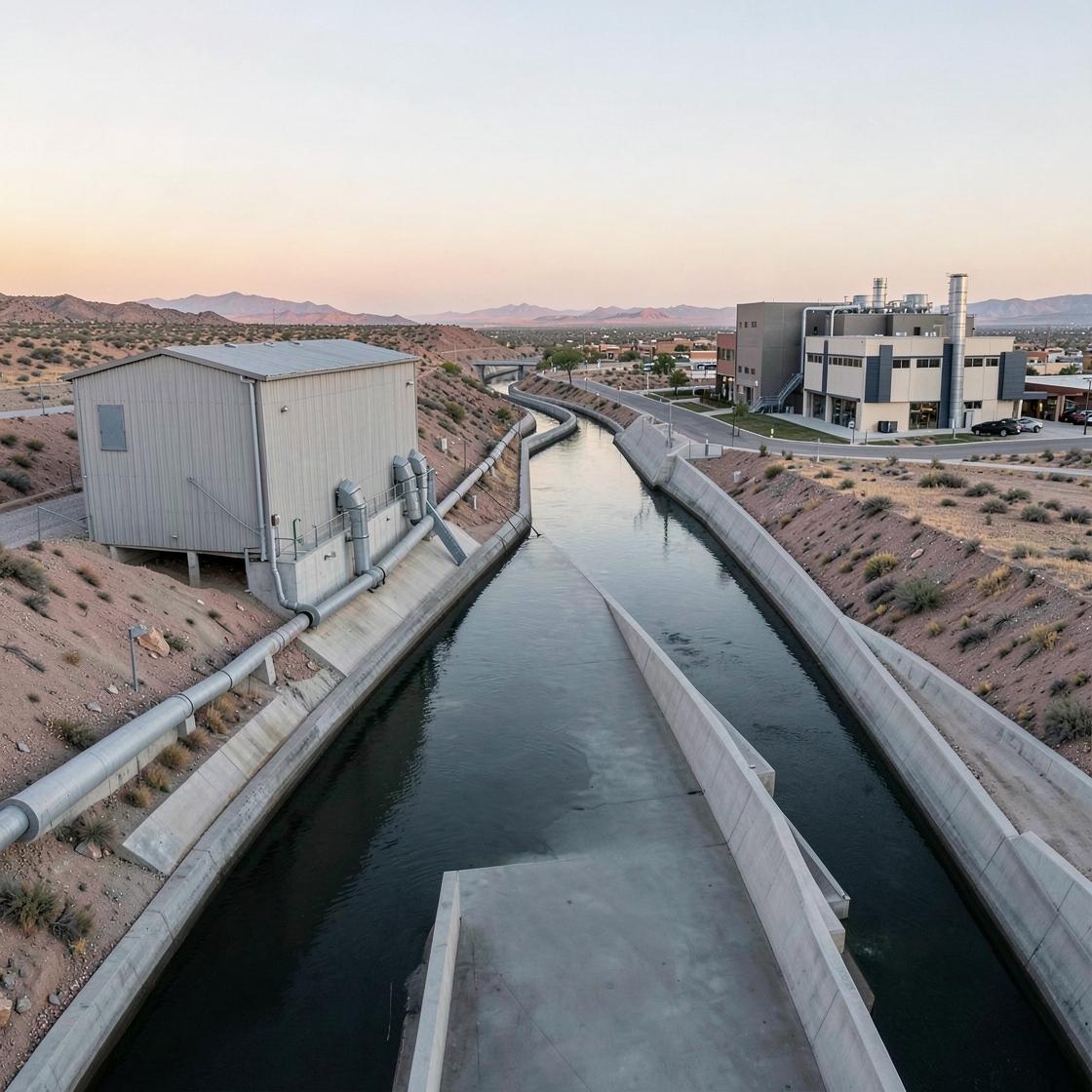
Phoenix has also built physical flexibility. The city says its approximately US$300 million Drought Pipeline can move Salt and Verde River water into northern areas that historically relied more on the Colorado. That asset does not create new river flow. It changes where existing supply can travel, reducing the chance that a geographically concentrated shortage becomes a service failure.
This is why resilience carries both value and cost. Storage, redundant conveyance and spare treatment capacity look underused in normal years. Under stress, they prevent a much more expensive interruption. Their return is avoided loss, which is real but harder to observe than revenue from selling another unit of water.
Reliability sits inside a multibillion-dollar capital plan
Phoenix Water publishes a six-year drinking-water programme of about US$9.132 billion, within a US$12.96 billion combined water and wastewater capital programme. The drinking-water plan identifies roughly US$1 billion for Colorado River resiliency, alongside pipelines, treatment, storage, pumps and other facilities. These are planned figures and can change; they also cover more than the new federal reduction. They nevertheless show the scale of the asset base required to turn a vulnerable allocation into dependable retail service.
Reuse adds another layer. Phoenix expects three planned advanced-purification facilities to provide more than 50,000 acre-feet of renewable water annually within the next decade. That supply is local and less exposed to river hydrology, but it requires construction, energy, treatment and regulatory execution. A project announcement is not yet delivered water, and the timing matters because the federal reductions begin in 2027.
For municipal-credit investors and local businesses, execution risk therefore sits in the overlap between near-term reserve use and long-term project delivery. Delays do not necessarily empty taps; they can extend reliance on finite buffers or force more expensive operating choices.
The bill depends on who pays for the bridge
Phoenix's current water tariff combines a fixed service charge, seasonal volume charges and environmental charges. That structure matters because a future revenue requirement can be allocated in several ways. Higher fixed charges provide predictable utility cash flow but weaken the price signal from conserving the next gallon. Higher usage charges strengthen that signal but can make revenue more volatile as customers consume less.
Capital can also be divided among existing ratepayers, growth-related fees, bonds and outside grants. The city is asking for federal support, which could shift part of the burden away from current customers, though federal money ultimately has its own fiscal source. Debt can spread the cost of long-lived assets across future users, but adds interest and coverage requirements. None of the current official materials supplies a defensible percentage for the bill increase caused specifically by this decision, so attaching one would be speculation.
Hydrology can still rewrite the financing path
The strongest counterargument is that Phoenix already paid for much of its bridge. A diverse supply mix, underground storage and completed conveyance may absorb the first two years without a large incremental rate shock. Wetter conditions, effective voluntary conservation or federal funding would reduce the amount of new capital that customers must finance.
The opposite scenario is also possible. Persistently low reservoirs, larger post-2028 cuts or project delays would make stored water more valuable and replacement supply more urgent. The evidence to follow is not a dramatic photograph of Lake Mead alone. It is Phoenix's actual Colorado allocation, annual reserve withdrawals, capital-project milestones, proposed rate cases and the source of funds assigned to each resilience project. Those records will show whether the water cut remains a manageable portfolio rebalance or becomes a more expensive claim on household and business cash flow.