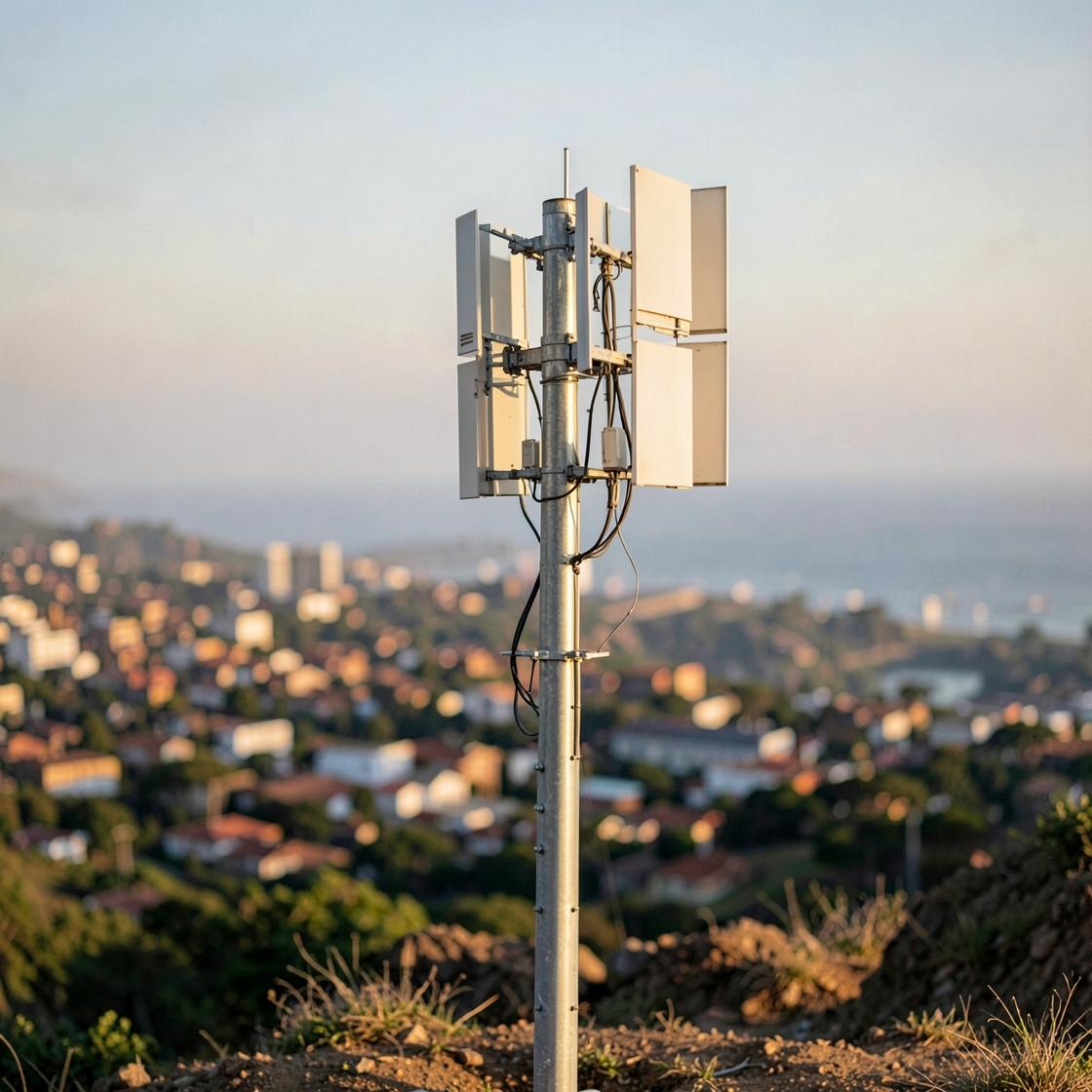
Before the new financing announcement, Africell had already described a practical problem in Angola: demand can arrive faster than a network can comfortably absorb it. That operating context gives the latest US-backed loan a more concrete financial meaning than a contest over equipment suppliers alone.
Associated Press reports a $99.6 million Export-Import Bank loan announced September 11 for American and European technology in Africell's Angola operations. Reuters independently identifies EXIM and the supplier-linked purpose. The amount describes financing. It is not a measure of equipment already operating, additional revenue or cash available to shareholders.
July exposed the difference between customers and capacity
Africell's July 29 operating statement described additional technical resources and temporary capacity management after a disruption across Angola's telecom sector increased demand for its services. That is company-reported historical context, not evidence that the same temporary restrictions remain in force today.
Separately, the company's FILDA update reported more than seven million customers in Angola and plans to expand into seven additional provinces. A customer milestone and an expansion plan establish scale and intention. They do not tell investors how much traffic the network can handle at busy times or how much each active customer contributes after costs.
The distinction is economically important. Acquiring a customer is useful only if the provider can deliver a service that the customer continues to value. In a hypothetical network under pressure, additional signups could bring revenue while also increasing congestion and support demands. Capacity investment could protect existing relationships as much as it enables new sales. Measuring only gross customer additions would miss that defensive value.
There is also a difference between geographic reach and usable capacity. A new area may need coverage before it can generate revenue; an existing area may need more capacity to preserve service quality. The same equipment budget can therefore support different commercial tasks. Without a project-level allocation, the loan amount cannot reveal how much is intended for expansion and how much for strengthening the installed network.
Export finance changes the procurement decision
Reuters describes the financing as supporting technology from American and allied suppliers. That links the loan to a procurement route. For an equipment seller, financing availability can help turn a customer's investment plan into an executable order. For the operator, it can reduce an immediate funding obstacle while leaving the eventual economics dependent on the equipment and the service it supports.
The relevant cost comparison extends beyond the initial purchase price. In an analytical procurement scenario, installation, maintenance, power requirements, software support and compatibility can all affect the cost of keeping capacity available. A favorable financing package could accompany equipment with higher or lower lifetime costs; the headline loan amount cannot decide between those possibilities.
Nor does financing identify the winners among suppliers. The reviewed reporting does not provide a complete contract allocation, drawdown schedule or set of loan terms. It would be premature to assign the entire amount to a listed vendor's revenue or calculate Africell's interest saving against another instrument. Those conclusions require specific commercial documents, not a geopolitical label.
The loan also remains debt rather than a grant in this analysis. If operating receipts and debt obligations expose the borrower to different currencies, repayment capacity could depend on exchange rates as well as customer demand. That is a conditional financing risk, not a claim about the exact currency structure or hedging of this facility. The undisclosed terms should not be replaced with assumptions presented as facts.
A supplier-linked loan can thus make procurement more feasible without proving that a project earns its cost of capital. Those are sequential questions. Funding opens the route to equipment; commissioning makes the equipment usable; dependable service and customer payments determine whether the route produces cash. Delays or additional operating costs can interrupt the chain at different points.
The return arrives through service that customers keep using
For an investor assessing the operator, the most useful future evidence would connect deployed capacity with service performance and cash generation. More equipment in service, fewer capacity-related interruptions and durable paying usage would be more informative together than any one headline metric. Revenue growth accompanied by worsening service or heavier customer-support costs would support a different interpretation.
The strongest counterargument to a narrow utilization test is resilience. Spare capacity can look underused in normal conditions and become valuable during a disruption. Africell's July statement makes that possibility relevant, but does not quantify its financial value. It would be wrong to reject every investment that fails to produce immediate traffic growth; protecting service continuity can also preserve revenue.
The corresponding caution is that resilience cannot become an explanation that excuses every weak result. Management would still need evidence that the investment improved reliability or protected customer relationships at a reasonable cost. If completed projects failed to improve service and did not support stronger cash generation, the optimistic financing story would weaken even if the equipment met the desired supplier criteria.
The new loan therefore has two audiences. Policymakers can assess whether it broadens the use of the technology they favor. The business must assess whether it can operate that technology effectively and earn enough from the service to support its obligations. Those objectives may align, but they are not identical. For Africell, the lasting financial result will be found in a network customers keep using, after the announcement has passed.