
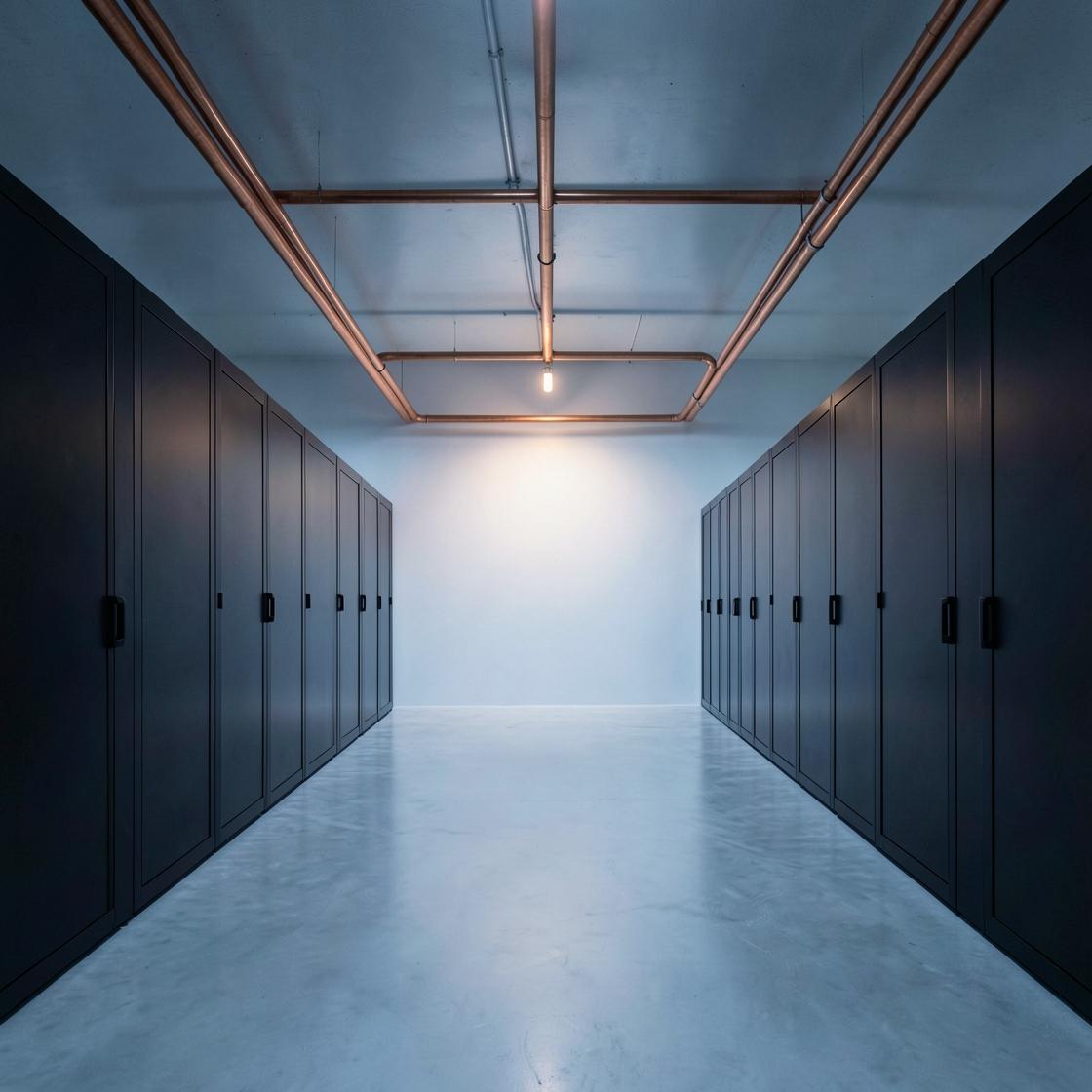
Meta's largest disclosed AI infrastructure number is not this year's capital-expenditure budget. It is the $278.99 billion of operating and finance leases that had not yet commenced at June 30. That distinction matters. The contracts reserve future data-center, colocation and network capacity, but the related facilities were not yet available for use and the obligations sat outside the lease liabilities already recognized on Meta's balance sheet.
The figure creates neither an immediate $278.99 billion cash bill nor proof that Meta has overbuilt. It does show how aggressively the company is committing before the commercial return is visible. The second-quarter filing says those leases will begin from the remainder of 2026 through 2036, with terms ranging from more than one year to 30 years. The investor question is therefore no longer only whether Meta can obtain AI capacity. It is whether that capacity will be used productively as a long commitment schedule starts to become an operating reality.
The obligation appears before the facility
A lease that has not commenced is a contractual commitment, not yet the same accounting object as a lease already in use. When a lease commences, the lessee generally recognizes a right-of-use asset and a corresponding lease liability, with subsequent expense and cash-flow presentation depending partly on whether it is classified as operating or finance. Until then, Meta discloses the commitment separately because the asset is not yet available for its use.
That is why calling the full amount hidden debt would obscure more than it explains. Meta's June balance sheet already showed $2.43 billion of current operating lease liabilities and $26.23 billion of non-current operating lease liabilities, alongside $83.66 billion of long-term debt. The $278.99 billion describes another layer: contracted leases waiting to commence. It is economically important because the contracts constrain future choices, but it is not interchangeable with debt due today.
The pace of commitment is as important as the level. Meta's March-quarter filing disclosed $182.88 billion of uncommenced leases. The June figure was $96.11 billion higher. That difference measures the change between two disclosures, not cash spent during the quarter. Meta also said it entered about $68 billion of additional data-center leases in July, expected to commence in 2027 and 2028 with terms of 18 to 20 years. The commitment pipeline was still expanding after quarter-end.
Capacity reservation transfers the demand risk
Reserving early can be rational. Data-center sites, power connections, chips, cooling and network links cannot be assembled instantly. A company that waits for proven demand may discover that the infrastructure needed to serve it is unavailable. Long contracts can secure deployment dates and transfer some construction and financing execution to landlords or partners.
The trade-off is that access risk becomes utilization risk. Once contracted capacity arrives, Meta needs enough useful workloads to absorb it. Those workloads may include training and operating models, improving advertising recommendations, ranking content, supporting business messaging, or powering new products. The contracts themselves do not disclose which application will use each facility or what revenue and savings it should generate.
This makes the lease schedule an operating-leverage commitment. If AI raises ad conversion, engagement or automation faster than infrastructure costs enter the income statement and cash flows, the reserved capacity can widen the productive base of an already large platform. If demand develops more slowly, Meta could carry long-lived capacity with weak incremental returns. The same fixed commitment magnifies either outcome; it does not determine which one will occur.
The cash engine and the commitment clock run together
Meta has a substantial business funding the buildout. Its second-quarter results reported revenue of $60.80 billion, 28% above the prior-year quarter, and operating cash flow of $31.86 billion. That supports the counterargument that the company can reserve scarce capacity without waiting for each facility to prove itself.
But the same release shows why cash generation is not a complete answer. Capital expenditures, including finance-lease principal payments, reached $31.08 billion in the quarter, and Meta's non-GAAP free cash flow was $784 million. Operating margin fell to 31% from 43%, although the quarter also included $2.40 billion of legal charges and $1.18 billion of severance expenses. Meta narrowed its 2026 capital-expenditure outlook to $130 billion-$145 billion.
Those current-period measures should not be divided into the $278.99 billion commitment as if all amounts covered the same period or accounting basis. They do not. The useful comparison is directional: Meta is simultaneously spending heavily on assets available now and signing leases for facilities that arrive later. As more leases commence, right-of-use assets and liabilities will appear, while rent, depreciation, interest, principal payments or operating cash outflows will be recognized according to lease type and timing. The buildout has a clock even if it does not have one bill.
Utilization is the missing return measure
The strongest bullish case is that Meta is matching long infrastructure lead times to visible internal demand. Advertising revenue is growing, AI already supports ranking and recommendation systems, and guaranteed capacity may avoid bottlenecks that would be costlier than carrying some early slack. A weak quarter of free cash flow would not disprove a multi-year infrastructure thesis.
The skeptical case is more specific than saying the number is large. Meta does not give investors a project-level commencement schedule, utilization rate or expected return for the disclosed leases. Revenue growth can coexist with poor returns on the marginal facility. Company-wide operating cash can cover commitments while the contracts still reduce the ability to change suppliers, locations or technical architecture. Long terms make forecasting error expensive.
Three scenarios matter. In the constructive case, lease commencements accompany durable AI-linked revenue growth or measurable cost savings, and free cash flow recovers after the investment wave. In a middle case, the facilities are used but returns arrive slowly, keeping margins and cash conversion below their previous levels. In the adverse case, capacity comes online faster than useful demand, leaving Meta to absorb fixed commitments or negotiate from a weak position. These are analytical paths, not forecasts.
Evidence that would change the assessment includes more detail on when facilities commence, how much capacity is used, and which products benefit; durable gains in advertising performance attributable to infrastructure; or stronger free cash flow after current capital spending. Cancellations, renegotiations, impairments or persistent margin pressure would point the other way.
The $278.99 billion disclosure is therefore best read as a map of future operating leverage. It should not be collapsed into current debt, and it should not be dismissed because payment is spread over years. Meta has solved part of the supply problem by contracting for capacity. The harder proof begins when that capacity arrives and investors can judge whether the workloads, revenue and savings arrive with it.