
Hyundai Motor Group has already earned the demand argument for more US capacity. Its share of the American vehicle market rose from 8.4% in 2020 to 11.2% in 2025 and 11.8% in the first half of 2026, according to Mobility Global data reported by CNBC. Group sales increased 50% over the 2020-25 period, placing Hyundai, Kia and Genesis together fourth in the market.
The capital argument is harder. Hyundai plans to invest $26 billion in the United States through 2028 and wants at least 80% of the vehicles it sells there to be built domestically by 2030, up from roughly 40% in 2024. Moving from imported volume to local fixed assets can reduce tariffs, shipping time and currency exposure. It also replaces some variable import cost with factories that must stay busy. The next point of market share therefore carries a utilisation requirement.
Three share points created the capacity argument
An increase from 8.4% to 11.8% is a gain of 3.4 percentage points, not a growth rate. In a mature vehicle market, that is material because assembly capacity, suppliers and dealerships must support the additional units. The discovery article says no other major carmaker added as much US share this decade.
The gain also spans three brands and several price points. Hyundai and Kia compete in mass-market segments, while Genesis extends the group into luxury. That breadth can support common platforms and purchasing scale, but group share does not guarantee every plant or model is equally productive. A successful compact SUV cannot automatically fill capacity designed for another powertrain or body style.
This is the first analytical boundary: historical share supports the decision to consider capacity, but future return depends on the units produced by specific assets. Investors need production, utilisation and mix — not only retail share — to evaluate the next phase.
Eighty percent rewrites the cost map
Localising at least 80% of US sales changes several exposures at once. Vehicles assembled domestically avoid the same import route as Korean-built models, which currently face a 15% US tariff according to management's comments reported by CNBC. Shorter supply routes can reduce shipping time and make production more responsive to regional demand. Local costs also align a larger part of expenses with the currency in which vehicles are sold.
Those benefits are not free. Assembly plants, battery facilities and supplier parks require capital before the final demand is known. Labour, maintenance and depreciation continue even when production slows. Localisation therefore exchanges some tariff and logistics uncertainty for operating leverage. When volumes are high, fixed costs are spread across more vehicles; when volumes fall, unit costs rise.
The 80% target should not be read as a tariff calculation alone. Hyundai says its localisation plan predated the latest duties, while tariffs accelerated it. That distinction matters because a factory justified only by a temporary trade barrier could lose part of its economics if policy changes. A plant supported by demand, logistics, product speed and tariff savings has several routes to a return.
Georgia must be filled by a changing product mix
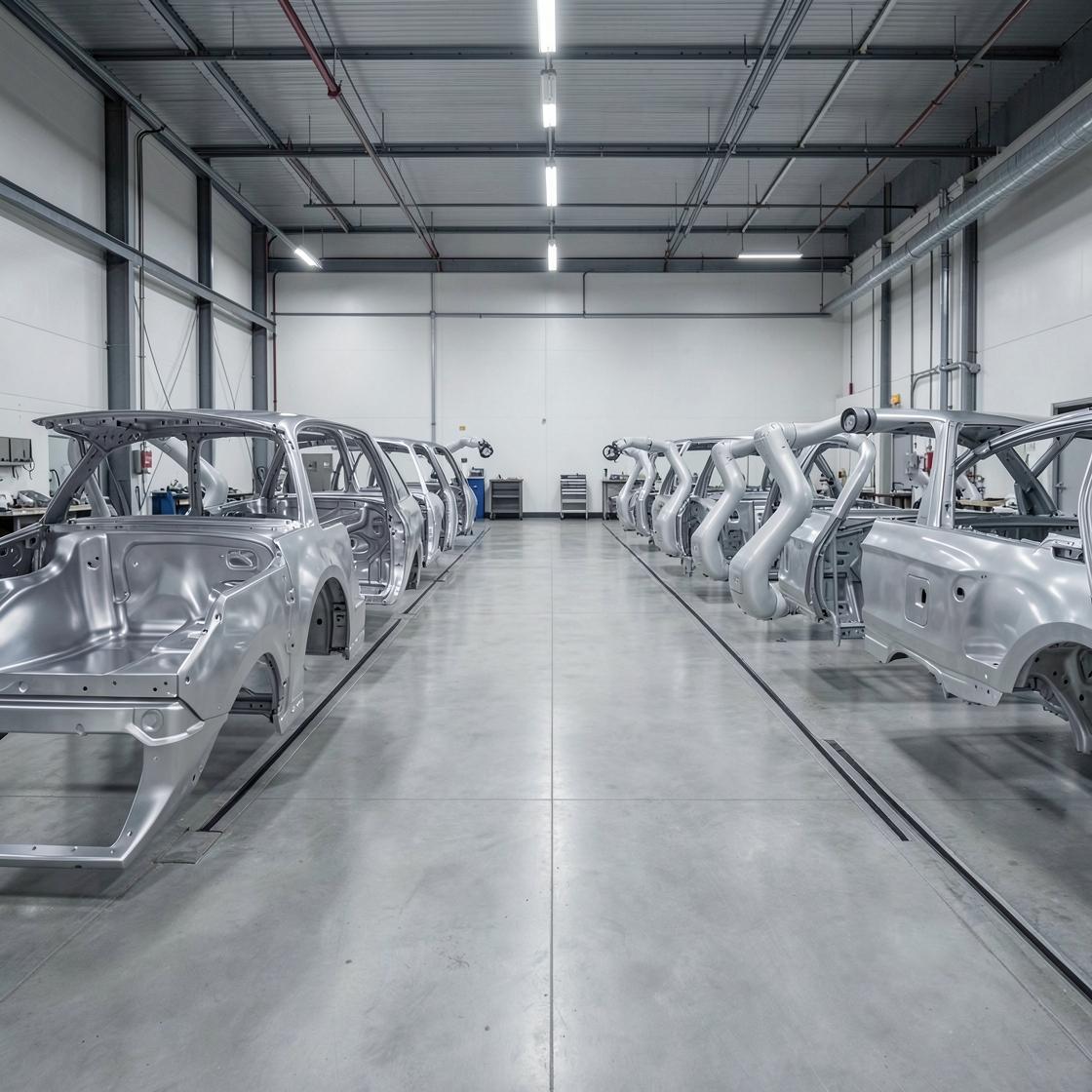
The centre of the plan is the $7.6 billion Metaplant in Georgia. Hyundai's chief executive told CNBC that the company is considering increasing expected capacity from 500,000 vehicles annually to between 700,000 and 800,000 by 2028. The site currently produces electric and hybrid models for Hyundai and Kia, with more vehicles expected.
An expansion of that scale is not simply more of the same. US demand is moving among battery-electric vehicles, hybrids, conventional engines, larger SUVs and pickups. Hyundai also says it plans 58 launches or refreshes in North America by 2030. Product proliferation can attract more customers, but it adds tooling, supplier and scheduling complexity.
Flexible manufacturing is therefore the economic hinge. If lines can switch among powertrains and related models, the group can use its brand portfolio to keep capacity occupied as demand changes. If each product requires narrow, dedicated assets, forecast errors become more expensive. The number of announced models matters less than how much equipment and working capital they share.
Hyundai's 2026 CEO Investor Day materials provide the company's strategic plan. Subsequent quarterly disclosures will need to connect that plan to capital expenditure, ramp costs, production and margin.
Europe proves the model but not the US return
Hyundai already produces about 80% of its European sales within the region, according to The Next Web. Its Nošovice plant in Czechia has annual capacity of about 350,000 vehicles, while İzmit in Türkiye produces about 230,000. That history demonstrates that the group can operate a regional manufacturing network rather than depend entirely on Korean exports.
Europe is useful execution evidence, not a direct return template. Model mix, labour arrangements, incentives, regulation, transport distances and competitive pricing differ from the United States. The American target is also being pursued during a rapid change in powertrains and trade policy. Copying the localisation percentage does not copy the economics.
The comparison does reveal one strategic idea: regional production can become a durable operating model rather than a short-term tariff response. If US plants develop supplier density, flexible lines and locally suited products, the investment can improve resilience beyond avoiding one duty.
Utilisation will arbitrate between resilience and excess
The strongest evidence for the plan will be mundane operating data. Domestic production as a share of US sales should rise alongside total sales rather than merely replacing profitable imports. Georgia's output should approach capacity without relying on inventory accumulation or persistent discounting. Model mix should support margins after launch and ramp costs, while capital expenditure should translate into operating cash generation over time.
Evidence against the thesis would include capacity additions running ahead of retail demand, rising dealer inventories, repeated production adjustments, or a shift toward lower-margin models needed simply to keep plants occupied. A reduction in tariffs would not invalidate localisation, but it would expose how much of the return depends on logistics and product responsiveness rather than protection.
The counterargument is credible: Hyundai enters the expansion with share momentum, multiple brands and European localisation experience. Those advantages can make local capacity safer than it would be for a new entrant. They cannot remove operating leverage. Market share explains why Hyundai is building. Utilisation will decide whether the factories improve the investment case.