
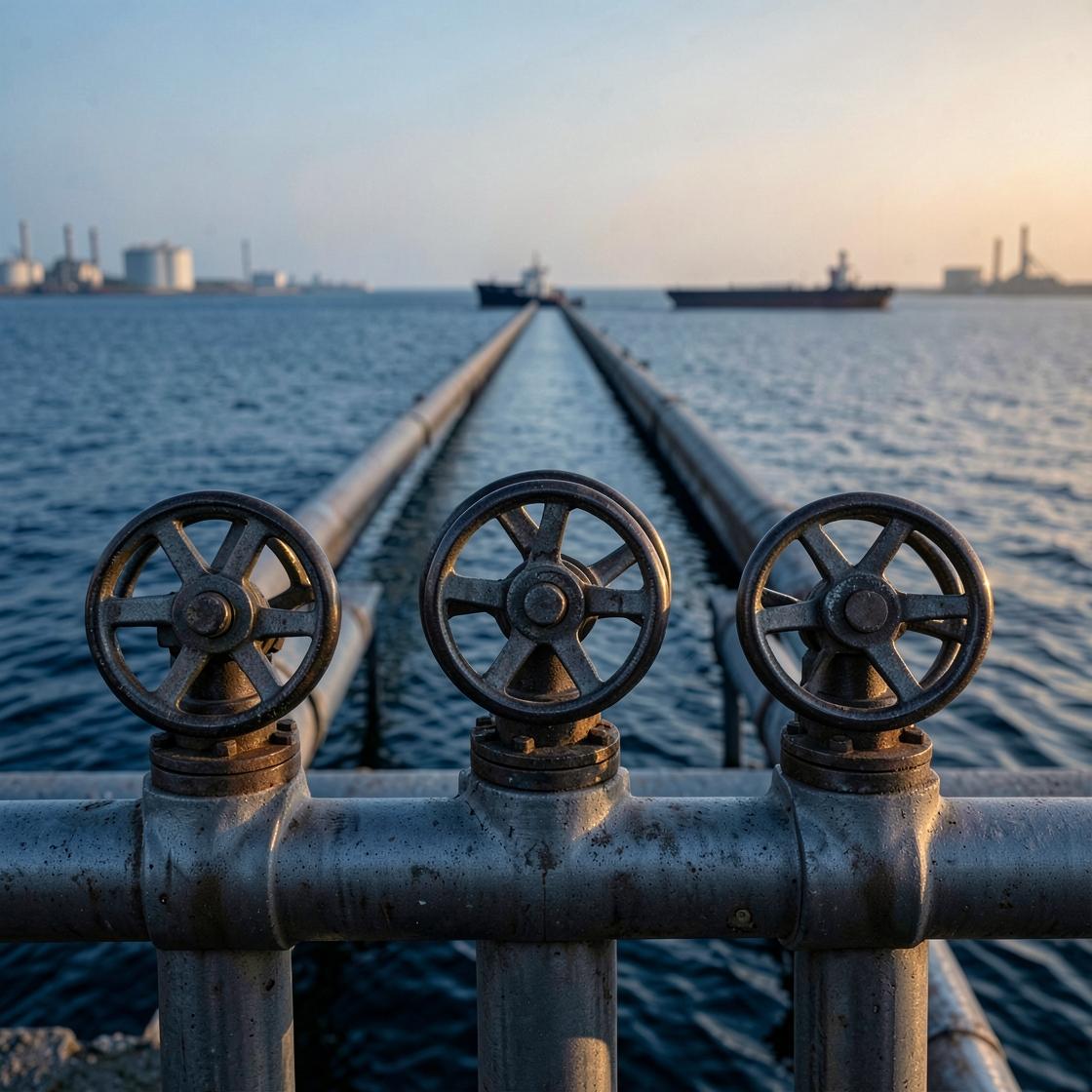
Oil prices delivered two apparently conflicting signals in less than a week. On July 29, ABC News reported that global prices climbed about 7%, with a worldwide crude benchmark crossing $90 a barrel after renewed hostilities undermined hopes for a negotiated calm. By Sunday night, the Associated Press reported that both U.S. crude and Brent fell 5% after the United States held off on new strikes.
Those moves do not mean the physical oil system recovered and broke again in four days. They show that futures prices can reweight possible supply paths faster than tankers sail, fields restart or inventories rebuild. For investors, the useful question is not whether the latest statement sounds conciliatory or threatening. It is how many barrels remain constrained, for how long, and where the next bottleneck appears.
A headline changes probability, not physical barrels
Oil is priced at the margin. A conflict headline can change the perceived probability of a longer shipping interruption, even if no cargo has yet been added or removed. The July 29 rise reflected greater risk that renewed fighting would interrupt a fragile recovery. The August 2 fall reflected the opposite adjustment: less immediate escalation risk and a higher chance that ships could keep moving.
This mechanism explains volatility without treating every move as a reliable forecast. In the second quarter, EIA data show front-month Brent trading between $72 and $118 a barrel. EIA calculated that daily price swings averaged $4 in April and May, versus $1 in the same months of 2025. Negotiation and rising tanker movements then pushed prices down by more than $1 a day on average from May 18 to June 17.
Prices were therefore responding to a sequence of probabilities: closure duration, safe passage, production recovery and demand destruction. A single price records the market's weighted view of those paths. It does not certify which path will occur.
The shortfall is measured in flows and restart time
The physical recovery was substantial but incomplete. The International Energy Agency's July report estimated that total Gulf oil exports, including volumes that bypassed Hormuz, rose by 6.5 million barrels a day in June to 16.1 million. That was still below the pre-war average of 24 million. Global oil supply increased by 4.1 million barrels a day to 98.8 million, yet remained 9.4 million below its pre-war level.
Shipping access and production are separate stages. A reopened route first releases cargoes already waiting on water or in storage. Producers must then restart wells and related infrastructure. The EIA's July outlook estimated that production shut-ins averaged 8.3 million barrels a day in June after peaking at 11.2 million in May. Its forecast assumed only 1.4 million remained shut in during the fourth quarter, with most production restored in the first quarter of 2027.
That forecast is a scenario, not a promise. It depends on continued transit and gradual restoration. Renewed attacks matter because they can push the expected recovery date outward, increasing cumulative lost supply even if a closure is not permanent.
Crude can return before usable fuel
The composition of the recovery matters as much as the headline export total. The IEA found that crude flows had recovered to nearly three-quarters of their February rate in June, while Gulf exports of refined products and liquefied petroleum gas remained below half. Key export refineries had not resumed loadings. More crude on the water did not immediately produce the same recovery in gasoline, diesel or jet fuel.
Inventories also complicate the picture. The IEA estimated that oil on water rose by 117 million barrels in June, but onshore stocks continued to fall by about 96 million, including 44 million from OECD government reserves. EIA estimated global crude inventories declined by an average 5.1 million barrels a day in the second quarter and expected another 2.2 million-barrel daily draw in the third.
This is why a risk premium can survive improving traffic. Released cargoes relieve the immediate shortage, while depleted commercial and strategic stocks still need replenishment. Product markets can remain tight if refineries lag crude production. The economic transmission then runs through transport fuel and refinery margins, not only the benchmark barrel.
Follow the route, then test the price
The bearish counterargument deserves equal weight. EIA says demand fell faster and trade adjusted better than it had expected. Some Gulf producers rerouted supply, exporters in the Americas increased shipments, and strategic stocks softened the shortfall. Under its July assumptions, EIA forecast Brent falling from a $103 second-quarter average to $70 in the fourth quarter as inventories begin to build. A lasting de-escalation could therefore remove the premium quickly.
The evidence test is observable. Tanker transits must improve without repeated reversals; shut-in production must decline; Gulf product exports and refinery loadings should catch up with crude; and onshore inventories should stop drawing. Freight and insurance conditions would provide an additional signal that physical risk is easing, although noisy vessel-tracking data should be treated cautiously because the IEA warns of GPS jamming, spoofing and ships going dark in the region.
Evidence that would weaken this analysis is a sustained flow recovery accompanied by product normalization and inventory builds, even if political rhetoric remains tense. Evidence that would strengthen it is another fall in transits, stalled production restarts or continued product shortages despite more crude at sea.
The latest headline may set today's direction. The durability of the move belongs to the physical ledger: barrels that cross, capacity that restarts and stocks that no longer need to be drawn down.