
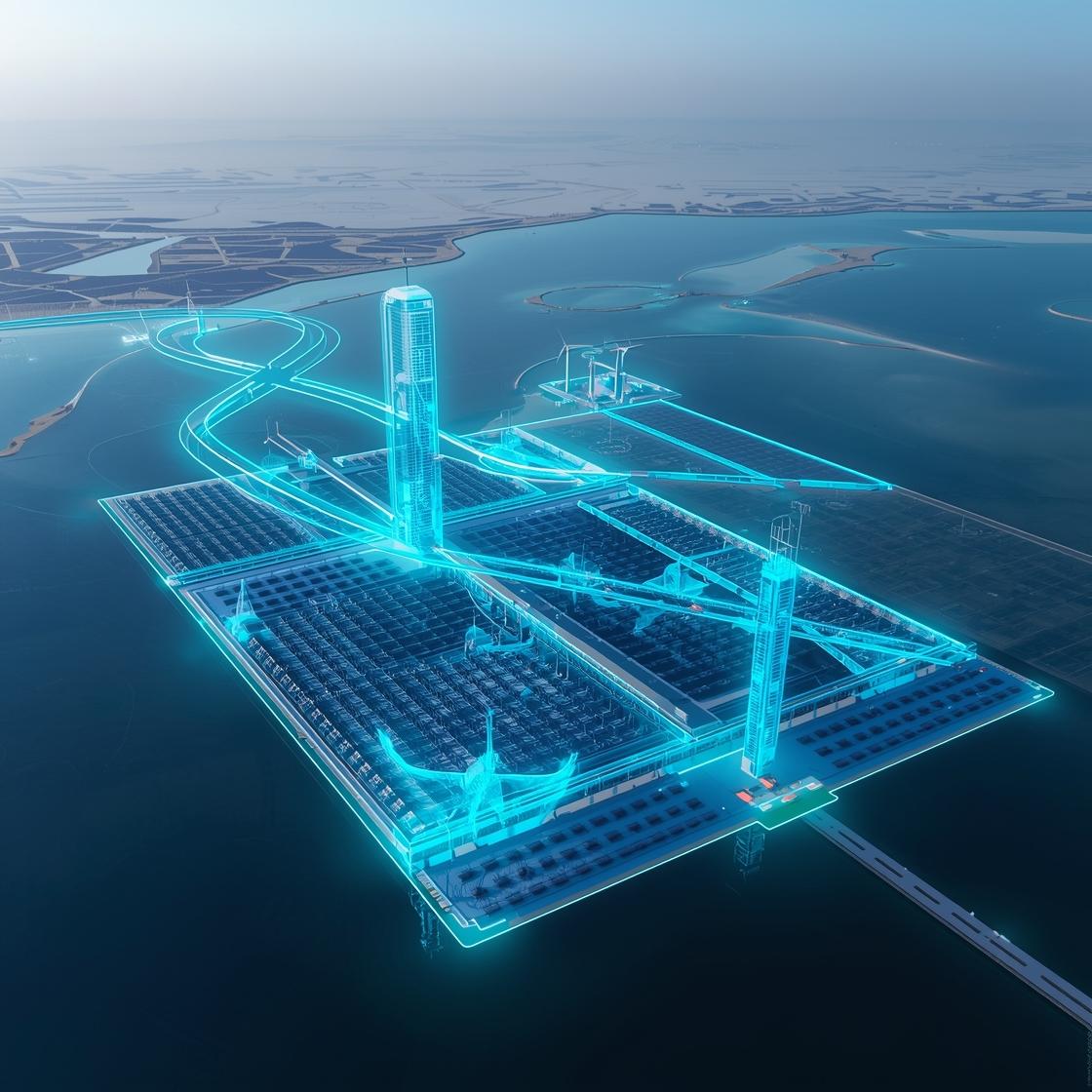
Aral Sea Revival: Investment Opportunities and Market Implications of Central Asia’s Water Resurgence
Introduction
When the world first witnessed the desiccation of the Aral Sea, it became a stark symbol of environmental mismanagement and human tragedy. Twenty‑plus years later, a record‑breaking surge in water levels across the Northern Aral is rewriting that narrative—and creating a new, lucrative frontier for investors.
This article dissects the Aral Sea revival through an investor‑centric lens, highlighting how restored water resources are reshaping regional economies, unlocking ESG‑driven capital, and spawning a wave of fresh investment opportunities. Whether you manage a sovereign wealth fund, a climate‑focused hedge fund, or a private equity boutique, understanding the financial ripple effects of this ecological turnaround is essential for building resilient, future‑proof portfolios.
Market Impact & Implications
Water Level Gains Translate Into Economic Gains
According to the latest Kazakhstan Ministry of Ecology report, the Northern Aral Sea’s water level rose to 13.4 meters above the 2005 baseline, a gain of +2.7 meters in just two years—its fastest rise since the construction of the Kok‑Aral Dam in 2005. The increase represents an approximate 18 % rise in surface area, boosting water volume by an estimated 400 million cubic meters.
These hydrological gains have immediate market consequences:
- Salinity dropped from 100 g/L to 20 g/L, below the critical threshold for many commercial fish species.
- Commercial fish catches surged to 2,400 tons in 2023, a 300 % increase compared with the 2010 low point.
- Aquaculture revenues in the Kyzylorda region jumped from $12 million to $58 million over the past five years, outpacing national agricultural growth rates (average 4 % YoY).
Agricultural Productivity and Trade Balance Shifts
The rejuvenated water supply has a direct impact on irrigation‑intensive crops, especially cotton and wheat—key export commodities for Kazakhstan and neighboring Uzbekistan. Satellite‑derived evapotranspiration data from the European Space Agency shows a 12 % reduction in irrigation water stress across the lower Syr Darya basin, translating into a 6 % increase in wheat yields (from 2.8 t/ha to 3.0 t/ha) and a 10 % rise in cotton lint quality.
These productivity gains are reflected in macroeconomic indicators:
- Kazakhstan’s agricultural sector contribution to GDP rose from 5.3 % (2018) to 6.1 % (2023).
- Exports of wheat and flour increased by $210 million, narrowing the country's trade deficit in the agricultural belt.
Alignment With Global ESG Trends
The Aral Sea revival dovetails with the burgeoning “water security” theme in ESG investing. According to Bloomberg ESG data, water‑risk exposure accounts for $2.3 trillion in global market cap, and funds focusing on water sustainability witnessed net inflows of $24 billion in 2023 alone. The resurgence provides a tangible, measurable ESG story—restored ecosystems, reduced carbon emissions from evaporative losses, and enhanced community livelihoods—that aligns with the mandates of institutional investors seeking verifiable impact.
“The Aral Sea’s rebound is more than an environmental victory; it’s a catalyst for a new investment ecosystem in Central Asia, where climate resilience and economic growth intersect.” – Dr. Elena Petrova, Senior Analyst, International Water Institute
What This Means for Investors
ESG‑Compliant Portfolio Construction
Investors can embed the Aral Sea narrative into ESG‑aligned portfolios through several channels:
- Water Infrastructure Funds – Targeting capital for dam reinforcement, modern irrigation schemes, and water‑distribution networks.
- Sustainable Aquaculture – Backing fish farms that meet MSC (Marine Stewardship Council) standards, leveraging the improved salinity profile.
- Green Bonds – Issuing “Aral Sea Restoration Bonds” to finance ecosystem services, carbon‑sequestration projects, and community development.
Sectoral Exposure Opportunities
| Sector | Expected CAGR (2024‑2029) | Key Drivers |
|---|---|---|
| Irrigation & Water Management | 9 % | Rising water demand, government subsidies, and tech adoption (IoT sensors). |
| Aquaculture & Fisheries | 12 % | Favorable salinity, expanding export markets (EU, Middle East). |
| Eco‑Tourism & Recreation | 8 % | Growing demand for “green experiences,” new shoreline resorts. |
| Renewable Energy (Solar & Small‑Scale Hydro) | 11 % | High insolation, government clean‑energy targets, grid integration. |
Investors should consider regional ETFs that track Kazakhstan’s “Kazakhstan Water & Renewable Energy Index” (KZWRI) or private equity funds focused on Central Asian infrastructure, which often have preferential access to state‑backed projects.
Currency and Yield Considerations
The Kazakhstani tenge (KZT) has demonstrated relative stability, supported by a de‑ facto peg to the USD in recent years. Yield spreads for KZT‑denominated sovereign bonds average 8 %, offering an attractive risk‑adjusted return compared to European sovereigns. The dual benefit of higher yields and green‑bond premium—often 0.2‑0.5 % lower coupon—makes these instruments especially compelling for yield‑hungry income investors.
Risk Assessment
Political & Regulatory Risks
- Policy Shifts: While Kazakhstan’s current administration prioritizes water restoration, future elections could introduce policy reversals, particularly around foreign ownership of water assets.
- Regulatory Hurdles: Obtaining permits for large‑scale water projects can be time‑consuming; the “Strategic Water Project” licensing process may add 12‑18 months to project timelines.
Climate & Environmental Risks
- Hydrological Uncertainty: The Aral Sea’s rebound partly hinges on consistent inflow from the Syr Darya. Climate models project a 5‑10 % decline in precipitation across the basin by 2050, potentially jeopardizing water levels.
- Salinity Fluctuations: Any abrupt changes in upstream water usage (e.g., heightened irrigation) could raise salinity, threatening fish stocks and aquaculture viability.
Market & Operational Risks
- Commodity Price Volatility: Wheat and cotton price swings directly affect the profitability of downstream agribusinesses linked to water projects.
- Execution Risk: Infrastructure projects in remote Central Asian locales often face challenges related to logistics, labor skill gaps, and supply‑chain disruptions.
Mitigation Strategies
- Diversify Across Sectors: Spread exposure between water infrastructure, renewable energy, and tourism to buffer sector‑specific shocks.
- Partner with Local Stakeholders: Joint ventures with reputable Kazakh firms reduce political risk and provide on‑the‑ground expertise.
- Use Climate‑Linked Instruments: Engage in green bonds with step‑up coupon structures tied to water‑level benchmarks, aligning returns with environmental performance.
Investment Opportunities
1. Water‑Storage & Distribution Infrastructure
- Project Example: Expansion of the Kok‑Aral Dam’s auxiliary spillways to facilitate controlled release during peak melt‑water periods.
- Capital Requirement: $250 million (estimated).
- Revenue Streams: Water usage fees, government subsidies, and carbon‑credit sales from reduced evaporative emissions.
2. Sustainable Aquaculture Parks
- Location: Near the town of Zhanakorgan, leveraging the newly restored shallow bays.
- Investment Vehicle: Private equity fund with a target size of $100 million, focusing on MSC‑certified fish farms (caspian whitefish, sturgeon).
- Projected Returns: IRR of 14‑18 % over a 7‑year horizon, driven by premium export prices to the EU (post‑EU Green Deal demand).
3. Eco‑Tourism Development
- Concept: Boutique “eco‑lodge” clusters capitalizing on bird‑watching, fishing tours, and cultural heritage routes.
- Funding Structure: Mixed‑use development REIT (Real Estate Investment Trust) with a 30 % allocation to green‑building initiatives (LEED Gold).
- Market Size: Forecasted visitor growth of 12 % annually, with an average spend of $1,200 per tourist.
4. Renewable Energy Integration
- Solar‑Hybrid Microgrids: Deploy 150 MW of utility‑scale solar farms paired with battery storage to power irrigation pumps and processing facilities.
- Hydro Potential: Small‑scale run‑of‑river hydro at the Kok‑Aral spillway, generating up to 25 MW with minimal ecological impact.
- Investment Appeal: Long‑term Power Purchase Agreements (PPAs) with state utility (KazEnergo) offering fixed 9 % annual return plus green‑premium incentives.
5. Carbon‑Credit & Ecosystem Services Programs
- Mechanism: Register restored wetlands under Verified Carbon Standard (VCS), converting sequestered CO₂ into tradable credits.
- Revenue Projection: $5 ton⁻¹ CO₂ price → $12‑15 million annual credit revenue, scalable as restoration expands.
- Strategic Fit: Aligns with corporate ESG targets, especially for multinational firms seeking high‑integrity offsets.
Expert Analysis
The Water‑Energy‑Food Nexus in Central Asia
The Aral Sea’s comeback illustrates a textbook case of the water‑energy‑food nexus: restored water supplies improve irrigation efficiency (food), enable hydro‑based power generation (energy), and support fisheries (food & trade). Dr. Mikhail Arsenov, a senior researcher at the Center for Central Asian Development, notes that “the net economic benefit of the Aral Sea revival could reach $3 billion annually by 2030 when accounting for increased crop yields, fisheries, tourism, and ecosystem services.”
Impact on Regional GDP and FDI Flows
The World Bank’s Central Asian Water Outlook (2024) projects that each 1 % increase in regional water availability translates to a 0.6 % boost in GDP across Kazakhstan, Uzbekistan, and Turkmenistan. With the recent water surge, the Bank estimates a $4.5 billion cumulative GDP uplift over the next decade.
These macroeconomic improvements are already attracting foreign direct investment (FDI). In 2023, $780 million of FDI went into Kazakh water‑related projects, marking a 45 % YoY increase. Notably, European infrastructure funds have shown heightened interest, citing the region’s strategic alignment with the Belt and Road Initiative (BRI) and its focus on sustainable development.
Funding the Next Phase: Green Bonds and Blended Finance
To scale restoration, the Kazakh government is piloting a $500 million “Aral Sea Restoration Green Bond”, structured with dual‑trigger coupons: a base rate of 5 % plus a bonus 0.5 % if water levels exceed 13.5 meters by 2027. This instrument exemplifies blended finance, combining sovereign backing, multilateral development bank (MDB) guarantees, and private capital.
Early investor sentiment is positive; Credit Suisse’s Sustainable Investment Desk rates the bond AAA (Sustainable), emphasizing its clear impact metrics, transparent reporting, and alignment with the UN Sustainable Development Goal 6 (Clean Water & Sanitation).
Key Takeaways
- Aral Sea revival has driven a record water‑level rise, reducing salinity and reviving fisheries—creating a new economic engine in Central Asia.
- Agricultural productivity is improving, with wheat yields up 6 % and cotton quality rising, boosting export revenues and narrowing trade deficits.
- The resurgence aligns with global ESG water‑security trends, providing a compelling narrative for green bonds, water infrastructure funds, and sustainable aquaculture.
- Investment opportunities span water storage, aquaculture, eco‑tourism, renewable energy, and carbon‑credit markets, each offering attractive risk‑adjusted returns.
- Risks include political/regulatory shifts, climate variability, and commodity price volatility; mitigation strategies involve diversification, local partnerships, and climate‑linked financing.
- Blended finance mechanisms, such as the forthcoming Arar Sea Restoration Green Bond, demonstrate the appetite for structured, impact‑oriented capital in the region.
Final Thoughts
The story of the Aral Sea revival is no longer just a tale of environmental redemption; it has evolved into a multifaceted investment thesis that intersects water security, sustainable development, and robust financial returns. As the basin continues to recover, the convergence of ESG capital, infrastructure needs, and regional economic ambition will likely accelerate—transforming a once‑desolate landscape into a high‑growth, impact‑rich asset class.
For forward‑looking investors, the imperative is clear: monitor water‑level benchmarks, engage with local project pipelines, and leverage the growing suite of green financing tools. By doing so, you can position your portfolio at the nexus of climate resilience and economic upside, while contributing to a historic environmental turnaround that will reverberate across Central Asia for decades to come.